That sharp first-step pain when you get out of bed is one of the most recognizable signs of plantar fasciitis. The plantar fascia, a dense band of connective tissue running from the heel to the ball of the foot, becomes irritated where it anchors at the calcaneus. Rest alone rarely settles it, because the tissue keeps getting reloaded the moment you stand. Colony Ortho RX builds insoles for plantar fasciitis and heel pain around that mechanical reality: support the arch, control the load, and protect the heel on every step.
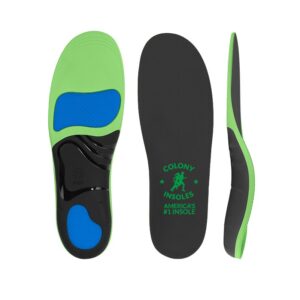 Doctor-Designed Orthotic
Premium Colony Ortho RX
- Recommended by podiatrists
- Memory foam + gel with real arch support
- 60-day money-back guarantee
- Free shipping within the USA
The biomechanics behind recurring heel pain
When the medial arch lowers during weight-bearing, the fascia is forced to elongate further than it tolerates well. That repeated tensile strain at the heel insertion is what drives the inflammation and the morning stab, since the tissue tightens overnight and gets pulled taut again at the first step. Hard flooring, unsupportive footwear, and long hours upright all increase peak fascial load. Soft cushioning by itself does little here, because it never addresses the overstretch that started the cycle. Reducing strain means controlling how far the arch collapses.
How the orthotic design manages fascial load
This insole is shaped to hold the arch at a height the fascia can tolerate, limiting elongation through midstance and easing tension at the insertion point. The structure works alongside targeted heel protection:
- Contoured arch support that limits midfoot collapse and reduces tensile strain on the fascia
- A deep heel cup that centers the calcaneus and stabilizes the rearfoot
- Layered cushioning under the heel positioned at the primary point of discomfort
- Shock attenuation that lowers impact loading on hard surfaces and during long walks
Pairing structural arch control with rearfoot stabilization reflects the orthotic approach podiatrists commonly take for plantar fascia overload. It addresses the cause and calms the symptom together, rather than masking one and ignoring the other.
Putting them to work
Transfer them into the shoes you already wear daily, whether that is work boots, trainers, or everyday footwear, so the heel lands on support instead of a bare footbed. People who spend long hours standing often notice the difference most clearly first thing in the morning, when fascial tightness is at its peak. If the heel itself is taking related strain, the same build supports management of heel spurs, and it works hand in hand with everyday arch support. This is educational guidance, not a diagnosis or a promise of cure, and a persistent or severe case still warrants a clinical assessment.
Try them under our guarantee
Colony Ortho RX is podiatrist-designed, medical-grade orthotic support built for biomechanical correction, not generic comfort. Every order ships free anywhere in the USA and is backed by a 60-day money-back guarantee. Wear them, load them, and if your heels are not better supported, send them back. Give your plantar fascia the support it needs →
Related Insoles & Guides
- Heel Inserts for Heel Pain Relief
- Shoe Inserts for Back of Heel Pain
- Heel Cups for Heel Pain Relief
- Plantar Fasciitis Explained: Causes & Relief
- Heel Support Insoles for Heel Pain Relief
- Shoe Inserts for Ball of Foot Pain
Frequently Asked Questions
Why is the first step out of bed the most painful one?
Overnight, with the foot unloaded, the irritated fascia tightens and begins repairing in a shortened position. Your first steps pull it abruptly back to working length, tugging on the inflamed insertion at the calcaneus, hence the recognizable morning stab. It is also why controlling how far the arch elongates during the day matters so much.
How does the insole reduce strain on the plantar fascia itself?
The fascia runs from heel to forefoot like a tie rod, so its tension rises as the arch flattens under body weight. The shell holds the medial arch at a height the tissue tolerates, limiting elongation through midstance, while the heel seat steadies the rearfoot. Less repeated overstretch at the insertion means less of the strain feeding the irritation.
My gel cushion inserts didn't help — what was missing?
Structure. Soft cushioning changes how impact feels but does nothing about how far the arch collapses, and collapse is what elongates the fascia past its tolerance. A supportive shell addresses that overstretch directly. Cushioning still has a place under a tender heel; it simply cannot substitute for controlling arch motion.
When should I wear them, and for how many hours a day?
The fascia reloads the moment you stand, which is why rest alone rarely settles it. Wear the insoles through your weight-bearing hours, especially on hard flooring and long days upright, easing in over the first week as your feet adapt. Recovery timelines vary by person, and heel pain that persists warrants a podiatrist’s evaluation.