What Is Posterior Tibial Tendon Dysfunction?
Posterior tibial tendon dysfunction (PTTD) is a progressive condition in which the tendon running along the inside of the ankle and into the arch becomes overloaded, inflamed, or degenerated. Because the posterior tibial tendon is the primary dynamic stabilizer of the medial arch, when it weakens the foot tends to flatten and roll inward. Early on, PTTD often feels like aching, swelling, or tenderness behind the inner ankle, sometimes mistaken for ordinary heel or arch pain. It is most common in adults over 40, in women, and in people who are overweight or who load the foot heavily for hours at a time. Left unmanaged, it can advance toward a flexible — then rigid — flatfoot deformity, so prompt biomechanical support matters.
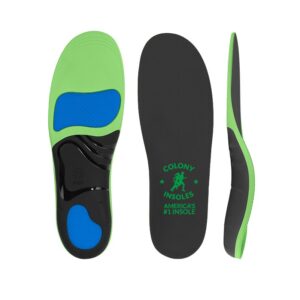 Doctor-Designed Orthotic
Premium Colony Ortho RX
- Recommended by podiatrists
- Memory foam + gel with real arch support
- 60-day money-back guarantee
- Free shipping within the USA
How Orthotics Help Biomechanically
The goal of an orthotic in PTTD is to reduce demand on the failing tendon by controlling excessive pronation and supporting the arch from underneath. When the medial arch is held up, the posterior tibial tendon no longer has to fight the full force of body weight pulling the foot flat, and that reduced tensile load gives irritated tissue a chance to calm down. A firm arch support with a deep, stabilizing heel cup helps hold the rearfoot in a more neutral position, limiting the inward collapse that strains the tendon with every step. Orthotic insoles like Colony Ortho RX are built for this kind of overpronation control, redistributing load so the tendon does less of the stabilizing work. Unlike a soft, flat cushion that only pads the foot, a corrective shell changes the position of the joints above it, which is what actually unloads the tendon.
- Cradle and elevate the medial arch to reduce tendon elongation
- Deep heel cup to limit rearfoot eversion and inward roll
- Firm midfoot shell to resist arch collapse under body weight
- Offload the inner ankle so inflamed tissue can settle
- Promote a more efficient, neutral gait during daily activity
Who PTTD Orthotics Suit
Supportive orthotics suit people with early-to-moderate PTTD, those prone to flat feet, and anyone on their feet for long hours — like nurses and shift workers — who notice inner-ankle fatigue. Orthotics are one part of management; combine them with the activity adjustments and rehab your clinician advises. This page is educational and is not a substitute for personal medical care.
Wearing PTTD Orthotics Day to Day
Use your orthotics in stable, closed shoes and break them in gradually over a week or two so your foot adapts to the new support. They tend to help most during prolonged weight-bearing, so they are a sensible choice if you stand all day at work. If pain sharpens, the arch keeps flattening, or single-leg heel raises become difficult, check back with your podiatrist — these can signal that PTTD is progressing and may need bracing or further assessment.
Related Orthotics & Guides
- Doctor-designed orthotic insoles built for pronation control
- Arch support inserts that resist medial collapse
- Overpronation insoles to stabilize a rolling foot
- Insoles for flat feet and fallen arches
- Support for nurses on their feet all shift
Frequently Asked Questions
Can orthotics cure posterior tibial tendon dysfunction?
No insole cures PTTD. Orthotics are a management tool: by controlling overpronation and supporting the arch, they reduce strain on the posterior tibial tendon so symptoms can settle and progression may slow. Lasting outcomes depend on early intervention, activity modification, and a rehab plan from your clinician.
What kind of orthotic is best for PTTD?
A firm, supportive orthotic with a strong medial arch and a deep heel cup is generally preferred, because it resists arch collapse and limits inward rearfoot roll. Soft, flat cushions provide comfort but little correction. The Colony Ortho RX insole is designed for this kind of pronation control rather than cushioning alone.
Should I wear PTTD orthotics in both shoes?
Yes. Even if pain is one-sided, wearing matched orthotics in both shoes keeps your gait symmetrical and prevents you from compensating on the other side. Use them in supportive, closed footwear with a stable heel for the best mechanical effect.
How long until orthotics help my inner-ankle pain?
Many people notice reduced strain within a few weeks once the tendon is consistently offloaded, but PTTD is a gradual condition and timelines vary by stage and activity level. Build wear time up slowly, stay consistent, and follow up with your clinician if pain worsens or the arch keeps flattening.