What a custom-molded orthotic actually does
A lab-cast orthotic is built from an impression of your foot, then corrected to a prescription: a posted rearfoot to manage pronation, a defined arch contour to control how the medial longitudinal arch loads, sometimes a metatarsal dome to offload the forefoot. For a structural deformity or a complex gait problem, that level of customization is the right clinical tool. It also means a specialist visit, a casting appointment, a multi-week lab turnaround, and a device keyed to one pair of shoes. Many feet don’t need a cast. They need consistent biomechanical support without the wait.
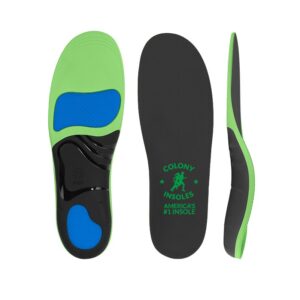 Doctor-Designed Orthotic
Premium Colony Ortho RX
- Recommended by podiatrists
- Memory foam + gel with real arch support
- 60-day money-back guarantee
- Free shipping within the USA
Where the “fits me” feeling comes from biomechanically
Strip away the lab process and the function of a custom device is to put your weight where the foot tolerates it best, controlling motion through the gait cycle rather than letting the arch collapse under load. A footbed that conforms to your plantar surface distributes pressure more evenly and reduces strain on the plantar fascia. Much of that conforming, load-sharing effect comes from material behavior and arch geometry, not from plaster. The right structure adapts to your foot shape as you move.
How Colony Ortho RX builds that support
Colony Ortho RX is a podiatrist-designed, medical-grade orthotic insole engineered to deliver that personalized support without the casting process. The memory foam top layer warms and conforms to your plantar contours, improving the contact area across the foot. Beneath it, a structured, geometric arch shell supports the medial longitudinal arch and helps resist excessive pronation across a wide range of foot types. A gel layer attenuates impact shock at heel strike. The pair ships free, costs a fraction of a clinic device, and goes under your foot today.
- Memory foam that conforms to the plantar surface for a personalized, pressure-distributing fit
- A geometric arch shell that supports the medial longitudinal arch and helps control pronation
- Gel cushioning that attenuates heel-strike shock on hard surfaces
- Podiatrist-designed orthotic support with no appointment and no lab wait
- Trims in seconds to sit cleanly across the shoes you already wear
Who this orthotic suits
If you’ve priced custom orthotics and stalled at the cost, this is a practical starting point for everyday biomechanical support. It also makes sense when you want one supportive device you can move between work shoes and training shoes, instead of a single prescription pair locked to one outsole. To match support to your foot type, look at our high arch insoles, and if you’re comparing brands, read our Aetrex alternative. This is educational information, not a substitute for a clinical exam, and persistent or worsening foot pain warrants assessment by a professional.
You can have structured, conforming support without the wait or a four-figure bill. Get your Colony Ortho RX for $29 with free U.S. shipping and a 60-day money-back guarantee. If the fit isn’t right for your feet, send them back.
Related Insoles & Guides
- Custom Made Insole Alternative
- Custom Made Shoe Inserts Alternative
- Powerstep Alternative
- Superfeet Insole Alternative
- Xstance Insole Alternative
- Aetrex Alternative Insoles
Frequently Asked Questions
When does someone actually need a lab-cast custom orthotic instead of this?
A lab-cast device earns its place when there is a structural deformity or a complex gait problem requiring prescription-level correction — a posted rearfoot, a precisely keyed arch contour, sometimes a metatarsal dome. If a clinician has identified that kind of issue, follow their guidance. Many feet simply need consistent arch support without the casting process.
What creates the molded-to-me feeling if nothing was cast from my foot?
Mostly material behavior and arch geometry rather than plaster. A footbed that conforms to your plantar surface spreads pressure more evenly and reduces strain on the plantar fascia — the load-sharing effect people describe as a custom fit. The memory foam adapts to your foot shape under body weight while the shell keeps the arch from collapsing.
How do the cost and process compare with going through a specialist?
The custom route involves a specialist visit, a casting appointment, a multi-week lab turnaround, and often a device keyed to one pair of shoes. Colony Ortho RX costs $29, ships free in the US, and trims to fit, so the same pair moves between shoes. The trade-off is prescription correction versus consistent structural support.
Does a prefabricated orthotic still control motion through the gait cycle?
That is the design target. The function a custom device performs — placing weight where the foot tolerates it best and controlling motion rather than letting the arch collapse under load — comes largely from structure. This podiatrist-designed shell holds the medial longitudinal arch through stance so loading stays managed step after step, no prescription required.