The efficient, low-effort stride people are chasing
There is a quality of gait where walking stops feeling like something the foot endures and becomes light and efficient. We started calling it the zenstep. Most people never reach it, and usually the foot is not the limiting factor, the footbed is. A surface that is too flat, too rigid, or worn through leaves the foot loading hard ground with each stride. That smooth, low-effort step is built from the ground up, and it depends on how force is managed at the point of contact.
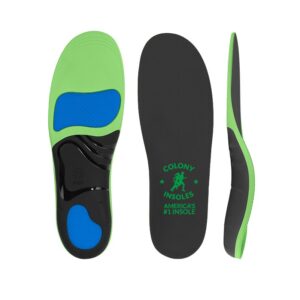 Doctor-Designed Orthotic
Premium Colony Ortho RX
- Recommended by podiatrists
- Memory foam + gel with real arch support
- 60-day money-back guarantee
- Free shipping within the USA
Why a controlled stride influences the whole chain
When the foot is supported and the landing is attenuated, the benefit travels up the kinetic chain rather than stopping at the ankle. The ankle moves more freely, the knee braces less against impact, and the lower back absorbs fewer jolts it was never built to handle. The reverse is also true: an unsupportive footbed transmits a small shock up the body on every step. You take thousands of steps a day, and stacking thousands of micro-impacts quietly raises the background load on every joint above the foot. Genuine shock attenuation lowers that cumulative demand.
How this orthotic engineers a smoother step
We make one medical-grade orthotic built for a grounded, controlled feel. A conforming memory foam top layer softens the landing, responsive gel assists the transition so push-off costs less, and a structured, geometric arch keeps the foot aligned and stable through stance. The result is real shock attenuation that lowers the impact load of a long day on hard surfaces, the kind of podiatrist-designed support engineered to keep you standing, walking, and running with the chain better protected.
- Conforming foam cushioning for a controlled, attenuated landing
- A responsive gel layer that assists the transition through each step
- Structured arch mechanics for stable, aligned movement through stance
- Shock attenuation that lowers cumulative load on the ankle, knee, and back
- Podiatrist-designed construction focused on how force moves up the chain
Who this orthotic suits
Anyone who wants walking to feel efficient again, including people on the move all day, travelers covering long distances on hard terminal floors, and those whose feet are fatigued before evening. If you carry that load up the chain, you will notice how structured support relates to lower back pain. And if your feet run broad, our notes on fitting wide feet will help you set it correctly. This is educational information, not a diagnosis or personal medical advice. Explore Colony Ortho RX orthotic insoles and work toward a smoother, more efficient stride.
Related Insoles & Guides
- Easy Feet Comfort Insoles
- Best Insoles for Nike Shoes
- Orthopedic Insoles
- Powerstep Alternative
- Superfeet Insole Alternative
- Xstance Insole Alternative
Frequently Asked Questions
What does a "zenstep" actually mean in walking mechanics?
It’s the term for a stride where ground contact is managed instead of endured — landing forces are attenuated at the footbed, the foot loads evenly through stance, and the step feels light and low-effort. Mechanically it comes from supported arch loading and a cushioned, controlled heel strike, not from changing how you consciously walk.
How does cushioning at the footbed affect my knees and lower back?
Each unsupported step sends a small shock up the kinetic chain. Over thousands of daily steps those micro-impacts accumulate into background load on the ankle, knee, and lumbar spine. When the footbed attenuates impact at ground contact, less force travels upward, so the joints above the foot brace less and absorb fewer jolts.
Can an insole really change how effortful walking feels?
Within limits, yes. If your current footbed is flat, rigid, or worn through, your foot is loading hard ground each stride and doing extra stabilizing work besides. A contoured, shock-attenuating orthotic takes over part of that job — supporting the arch through stance and softening the landing — and that shared workload is what a lighter, lower-effort step is built from.
Is this only relevant if my feet already hurt?
No. The mechanics apply before symptoms do. An unsupportive footbed transmits a small shock up the body on every step whether or not you feel it in the foot itself, and thousands of those micro-impacts quietly raise the background load on every joint above. Attenuating force at contact is about lowering that cumulative demand, not just easing existing soreness.