Comparing Superfeet? Read the biomechanics first
Plenty of people know the Superfeet name, and if you’re here you’re probably asking whether premium insoles are worth the cost. The honest answer is yes, a well-built orthotic earns its keep, but you shouldn’t overpay or face a wall of color-coded models to find one. Colony Ortho RX makes one medical-grade orthotic insole for $29 a pair, and it does the job without the guesswork.
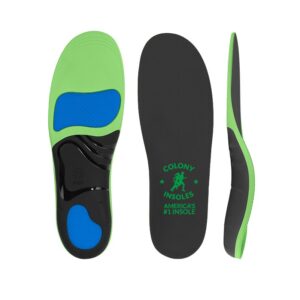 Doctor-Designed Orthotic
Premium Colony Ortho RX
- Recommended by podiatrists
- Memory foam + gel with real arch support
- 60-day money-back guarantee
- Free shipping within the USA
What worn, unsupported feet are doing under load
Most shoes ship with a thin foam liner that compresses within a few weeks. Once it flattens, the arch loses its backup and the heel absorbs more of the impact at every step. The result is familiar: achy feet, sore knees, that drained heaviness by closing time. Biomechanically, an unsupported arch lets the foot overpronate through midstance, increasing strain on the plantar fascia and shifting load up the chain. Dropping in a structured orthotic is one of the most cost-effective ways to change how that load is managed, and many people notice it on day one.
How this orthotic delivers
Colony Ortho RX is built around a structured, geometric arch shell with memory foam and gel on top. The shell is shaped to support and steady the foot, helping control pronation through the gait cycle, while the foam and gel layers conform to the plantar surface and attenuate shock step after step. It’s a podiatrist-designed, medical-grade device made to support you whether you’re standing a full shift, walking the dog, or logging trail miles. Rather than guessing which profile is yours, you get one balanced orthotic that suits a wide range of feet.
- A firm, structured arch shell that supports without feeling like a board
- A memory foam top layer that conforms to the plantar surface
- Gel cushioning for meaningful impact attenuation
- One clinically-informed orthotic, no color maze to decode
- Medical-grade support at a friendly $29
Who it’s for
If you’re on your feet for work, training hard, or chasing steadier everyday support, this was made with your mechanics in mind. Comparing is smart, so look over our Powerstep alternative or our orthopedic insole guide while you decide. This is educational information, not a diagnosis; persistent foot pain should be evaluated by a professional.
No pressure. Wear Colony Ortho RX risk-free for 60 days, and if they aren’t the most supportive insoles you’ve owned, return them for every penny. Free shipping across the USA is standard. Get a pair and give your feet the structured support they’ve been asking for.
Related Insoles & Guides
- Superfeet Alternative Insoles
- Powerstep Alternative
- Xstance Insole Alternative
- Aetrex Alternative Insoles
- Custom Insoles Alternative for $29
- Birkenstock Alternative Insoles
Frequently Asked Questions
How does Colony Ortho RX control pronation without a color-coded firmness lineup?
Pronation control comes from the structured, geometric arch shell under the midfoot. It braces the medial arch through midstance so the foot rolls inward less under load, while the memory foam and gel above cushion heel strike. Rather than matching yourself to a firmness color scale, you get one calibrated shell shaped specifically for that job.
What happens biomechanically when my shoe's stock liner flattens out?
Factory liners are thin foam that compresses within a few weeks. Once flat, the arch loses its backup and the heel absorbs more impact at every step. The unsupported arch then lets the foot overpronate through midstance, which raises strain on the plantar fascia and shifts load up the chain toward the knees and hips.
Can a $29 orthotic really do the same job as a premium-priced insole?
Judge any insole by function: does the shell hold the medial arch, steady the rearfoot, and absorb impact? Those jobs depend on shell geometry and materials, not the price tier. Colony Ortho RX concentrates its engineering into a single medical-grade design, which is how it delivers structured pronation control without a premium markup.
When should I expect to notice a difference after switching to a structured orthotic?
Many wearers notice the change in load management on day one — less jarring at the heel and steadier arch contact. If your feet are accustomed to flat, collapsed liners, firmer midfoot support can feel unfamiliar at first, so build up wear time gradually. The 60-day money-back window gives you room to evaluate it properly.