Why the Worst Moment Is Before You’re Even Standing
Few injuries announce themselves like an irritated Achilles. Swing your legs out of bed, plant that first step, and a hot, ropey ache fires up the back of the ankle, the tissue stiff and angry after a night of rest. That tendon is the cable through which your gastrocnemius and soleus deliver propulsion to the heel bone, and once it turns reactive, every toe-off becomes a calculation. The encouraging reality is mechanical: what sits beneath the heel can directly lower the tensile demand on the tendon while it recovers.
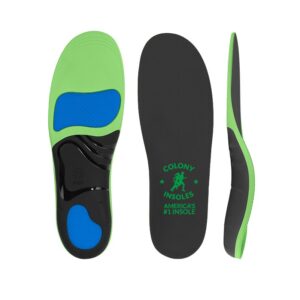 Doctor-Designed Orthotic
Premium Colony Ortho RX
- Recommended by podiatrists
- Memory foam + gel with real arch support
- 60-day money-back guarantee
- Free shipping within the USA
The Path the Tendon Is Forced to Travel
Tendinopathy here is fundamentally a loading story. When the rearfoot collapses inward through excess pronation, or the heel drops into a shoe whose counter has broken down, the Achilles gets stretched along a longer and more strained route with each step. Stack thousands of those elongations across a day and the tissue never gets a window to settle. A correctly built insole intervenes at three points: it softens the calcaneal blow at touchdown, it props the rearfoot upright so the heel quits rolling medially, and it trims the repetitive eccentric tug that keeps the tendon inflamed. Drop the strain reaching the tendon and the irritation finally has room to fade.
Taking the Pull Off the Cable
Our orthotic combines a memory foam and gel surface with a structured, geometric arch support that seats the heel bone and steers the foot back toward neutral. The gel platform absorbs the spike of force at heel strike, so the tendon is no longer asked to soak up the full landing. It is a podiatrist-developed design meant to carry you through standing, walking, and running with far less of that strain hauling at the rear of the leg.
- Damped heel landing that lowers tensile load on the tendon
- Geometric support that holds the rearfoot upright and aligned
- Shock-attenuating gel that blunts the impact spike at touchdown
- Drops into trainers, work footwear, and boots
- One medical-grade pair at $29
Is This Your Heel?
Maybe you are a runner returning cautiously after a flare, maybe you log a full shift upright, or maybe you are simply tired of dreading that first morning step. Rearfoot complaints rarely travel alone, so our pages on shoe inserts for plantar fasciitis and insoles for heel pain are worth a look. This is educational guidance, not a diagnosis, and a tendon that stays sore deserves a clinician’s eyes.
Walking should not require bracing first. We ship free across the USA with a 60-day money-back guarantee, so if the heel is no better, you owe nothing. Take the tension off that tendon today.
Related Insoles & Guides
- Best Shoe Inserts for All-Day Comfort
- Heel Inserts for Heel Pain Relief
- Gel Insoles for Real Shock Absorption
- Height-Boosting Shoe Inserts
- Orthopedic Shoe Inserts
- Arch Support Shoe Inserts
Frequently Asked Questions
What makes the first steps out of bed so painful with Achilles tendonitis?
After a night of rest the tendon sits stiff and unloaded, so those first steps ask reactive tissue to stretch and transmit force before it has eased into the day, producing that hot, ropey ache up the back of the ankle. Lowering the tensile demand of each step, starting with what sits beneath the heel, gives the tissue room to calm.
How can an insert under my heel affect a tendon behind my ankle?
The Achilles is the cable through which your calf muscles deliver propulsion to the heel bone, so the heel’s position dictates the tendon’s working length. An insole that props the rearfoot upright stops the heel rolling medially, and cushioning softens the calcaneal blow at touchdown, together trimming the repetitive tug that keeps the tendon inflamed.
Does overpronation actually strain the Achilles?
Yes. When the rearfoot collapses inward, the tendon is stretched along a longer, more strained route with every step. One elongation is trivial; thousands across a day never give the tissue a window to settle. That is why controlling rearfoot alignment is central to managing Achilles tendinopathy, not just cushioning the heel.
Can I stay active while the tendon recovers if I use these inserts?
The insole’s job is to lower the tensile demand reaching the tendon, softening touchdown, holding the rearfoot upright, and trimming the eccentric tug of each stride, which makes everyday activity less provocative. How much loading is wise varies by case, though, so treat this as mechanical support and let persistent or worsening pain prompt a professional assessment.