The Sharp Pain at the Back of the Heel
If this page found you, the posterior heel is likely the source, right where the shoe collar meets the calcaneus. It aches on the first steps after rest, tightens through midstance, and burns by the end of a long day on your feet. Posterior heel pain is one of the more stubborn complaints clinically, and it can turn an ordinary walk into something you would rather avoid. Understanding the mechanics behind it is the first step toward managing it.
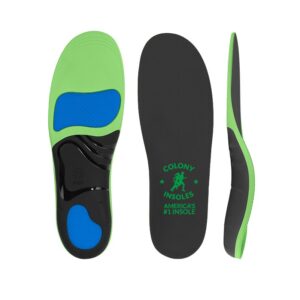 Doctor-Designed Orthotic
Premium Colony Ortho RX
- Recommended by podiatrists
- Memory foam + gel with real arch support
- 60-day money-back guarantee
- Free shipping within the USA
Why This Region Takes Such a Load
The back of the heel is a busy anatomical junction. The Achilles tendon inserts at the calcaneus, and the surrounding soft tissue absorbs impact every time the foot lands. Several factors tend to overload it: friction from the shoe heel counter, an altered heel-strike pattern, and a collapsed arch that has pulled rearfoot alignment out of neutral. When the foot pronates excessively, the calcaneus everts and tension distributes unevenly through the Achilles insertion. Stack those forces and stress funnels straight to that tender region, where irritation tends to compound rather than resolve on its own.
How the Orthotic Reduces the Load
This insole is engineered to offload that specific region and address the mechanics behind it. A deep heel cup seats the calcaneus in a stable, centered position so the foot stops sliding forward and grinding against the heel counter. Beneath it, a gel layer attenuates the impact of each landing before it transmits up through the Achilles. Memory foam cushions the posterior soft tissue, while a structured arch profile controls the rearfoot alignment and pronation that overloaded the insertion in the first place. This is the kind of layered, motion-controlling support podiatrists recommend.
- A deep heel cup that stabilizes the calcaneus and limits friction against the shoe
- Gel shock attenuation that reduces load through the Achilles and its insertion
- Memory foam that cushions the posterior soft tissue on every footfall
- Structured arch support that addresses the rearfoot alignment behind the pain
- Mechanical offloading that lets you stand and walk with less aggravation
Who This Suits
Runners, walkers, and anyone whose posterior heel flares partway through a shift. If a stiff new pair of shoes irritated the area, or the Achilles feels persistently tight, you may notice relief as the mechanics improve.
If the discomfort extends deeper into the plantar heel, our guide to heel pain inserts will help, and those managing a chronically tight Achilles often pair this with our plantar fasciitis support. One clinical note: pain that persists or worsens deserves a proper evaluation. Get your Colony Ortho RX now and give the back of the heel the offloading it needs.
Related Insoles & Guides
- Heel Inserts for Heel Pain Relief
- Shoe Inserts for Back Pain
- Heel Cups for Heel Pain Relief
- Insoles for Plantar Fasciitis & Heel Pain
- Insoles for Back Pain Relief
- Heel Support Insoles for Heel Pain Relief
Frequently Asked Questions
Why does the back of my heel hurt most on the first steps after rest?
Overnight or during long sitting, the Achilles complex and surrounding soft tissue settle into a shortened position. The first steps re-tension that tissue against the calcaneus all at once, which is why posterior heel pain classically stabs early, eases somewhat as you warm up, then burns again after a long day of loading.
How does a heel cup help pain at the Achilles insertion?
A deep heel cup seats the calcaneus in a stable, neutral position. When the rearfoot stops everting with every step, tension distributes more evenly through the Achilles insertion instead of pulling unevenly on one side of it. Cradling the heel also reduces the shearing movement against the shoe’s heel counter that keeps the area irritated.
Does arch support matter if my pain is at the heel, not the arch?
Yes, because the two are mechanically connected. A collapsed arch lets the foot pronate excessively, the calcaneus everts, and Achilles tension loads unevenly at its insertion. Supporting the medial arch restores rearfoot alignment closer to neutral, which quiets the abnormal pull at the back of the heel — treating the mechanism rather than just padding the sore spot.
When should posterior heel pain be seen by a clinician instead?
Seek an exam if pain is sharp after a sudden push-off injury, if there is a tender bony bump, visible swelling, or symptoms that persist or worsen despite several weeks of offloading and footwear changes. Insertional problems can compound when ignored, and this page is education, not a diagnosis of your specific heel.