What Orthotics Actually Do
Orthotics are insoles engineered to change how load travels through your foot during each step. By supporting the medial arch, cradling the heel, and guiding the foot through a more neutral stride, they reduce the repetitive strain that drives many lower-limb complaints. The question is rarely whether you need support — it is whether you need a fully custom-molded orthotic or a well-built over-the-counter device. For most people, the honest answer is the latter.
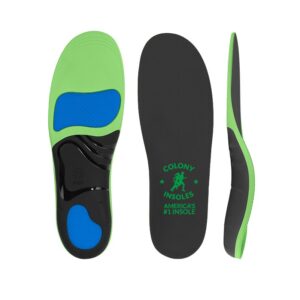 Doctor-Designed Orthotic
Premium Colony Ortho RX
- Recommended by podiatrists
- Memory foam + gel with real arch support
- 60-day money-back guarantee
- Free shipping within the USA
How Custom and OTC Orthotics Differ
Prescription custom orthotics are fabricated from a 3D cast or scan of your foot, typically by a podiatrist, and cost hundreds of dollars. They make sense for specific, complex cases. Quality OTC orthotics use validated foot-shape geometry and a semi-rigid shell to deliver real biomechanical correction at a fraction of the price. The practical differences come down to:
- Fit method: custom is molded to one foot; OTC is sized to population-based arch profiles that suit the majority of feet.
- Correction level: both can support pronation control, though custom allows posting for severe deformity.
- Cost and access: OTC is immediate and affordable; custom requires appointments and lab time.
- Replacement: OTC is easy to replace as it wears; custom replacement repeats the full cost.
- Evidence: for common conditions, studies generally show prefabricated devices perform comparably to custom.
Who Genuinely Needs Custom
Custom orthotics are worth the investment for diabetic foot offloading, significant limb-length discrepancy, rigid deformities, post-surgical needs, or rheumatoid changes — situations where a generic high-arch insole cannot accommodate the foot safely. If a clinician has flagged these, follow that guidance.
Who OTC Orthotics Suit Best
If you have garden-variety plantar fasciitis or heel pain, mild to moderate overpronation, or sore feet from standing all day, a structured OTC orthotic is a sensible, low-risk first step. Many people manage these conditions well without ever needing a custom device. Try supportive insoles for several weeks; if symptoms persist or you have a complex medical foot, see a podiatrist.
Related Orthotics & Guides
- Doctor-designed orthotic insoles for everyday support
- Insoles for plantar fasciitis and heel pain
- Overpronation control inserts
- How Colony Ortho RX compares to Superfeet
- How Colony Ortho RX compares to Powerstep
Frequently Asked Questions
Are custom orthotics always better than over-the-counter ones?
Not for most everyday conditions. For common issues like plantar fasciitis or overpronation, research generally shows quality prefabricated orthotics perform comparably to custom ones. Custom devices matter most for complex medical feet, such as diabetic offloading or rigid deformities.
How do I know if my arch type fits an OTC orthotic?
Most over-the-counter orthotics are built to population-based arch profiles that suit the majority of feet, with options for low, neutral, and high arches. If a structured insole feels supportive without pressure points after a short break-in, it likely fits. Persistent discomfort warrants a clinical assessment.
When should I see a podiatrist instead of buying insoles?
See a podiatrist if you have diabetes, numbness, a significant limb-length difference, a rigid deformity, post-surgical needs, or pain that does not improve after several weeks of supportive footwear and OTC orthotics. These pages are educational and not a substitute for personal medical advice.
How long do over-the-counter orthotics last?
It varies with body weight, activity, and material, but most structured OTC orthotics hold their support for several months to roughly a year of regular wear. Replace them when the shell softens, the top cover wears through, or your symptoms start returning.