For anyone managing diabetes, the foot becomes a structure that deserves close attention. The concern is not comfort alone. It is the way repeated, concentrated load interacts with skin and soft tissue when protective sensation is reduced. A localized pressure peak that would normally trigger a person to shift their weight may go unfelt, which is precisely why how load is distributed underfoot carries real clinical weight.
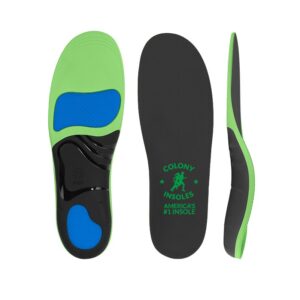 Doctor-Designed Orthotic
Premium Colony Ortho RX
- Recommended by podiatrists
- Memory foam + gel with real arch support
- 60-day money-back guarantee
- Free shipping within the USA
Peripheral neuropathy changes the equation. When sensory feedback is blunted, a high-pressure zone over the heel, the metatarsal heads, or a bony prominence can accumulate mechanical stress without the usual warning. A flat, unyielding insert compounds this by funneling body weight into those same focal points instead of dispersing it. The biomechanical goal is the opposite: broaden the contact area so peak plantar pressures come down and the foot is loaded more evenly through the gait cycle.
Pressure redistribution and structural support
Colony Ortho RX is engineered around that principle. The memory foam and gel layer conforms to the plantar contours and helps redistribute load across a wider surface, easing the focal pressure that tends to build over prominent areas. The structured arch support maintains rearfoot and midfoot alignment so weight is carried through the foot as it was designed to be, rather than dumped onto two points. Built-in shock attenuation dampens ground reaction forces at each step. The top cover is finished smooth, with no seam or ridge to create a hot spot.
An honest clinical boundary
Read this carefully. Colony Ortho RX provides supportive, pressure-managing footwear support; it is not a prescription medical device, and we will not imply that it treats, prevents, or cures any diabetic foot complication. If you live with diabetes, your podiatrist or physician should assess your specific risk category and footwear needs before you change anything inside your shoes. They understand your circulation, sensation, and history. This page is educational, not personal medical advice or a diagnosis.
- Pressure-redistributing cushioning that lowers focal load across the plantar surface
- Conforming support that adapts to the contours of each foot
- Aligned arch mechanics that stabilize the rearfoot and midfoot
- Podiatrist-designed, medical-grade orthotic construction built for gentle, even support
- Free U.S. shipping and a 60-day money-back guarantee
Support that extends through the day
The same load-management principles apply across your routine. If your day involves long periods upright, our notes on insoles for standing all day are worth reading, and if your arches sit low and pronate inward, see our guide to insoles for flat feet.
Feet under metabolic stress benefit from being loaded thoughtfully from morning to night. For $29 a pair, backed by a 60-day guarantee, you can give them cushioned, evenly distributed support. Get a pair of Colony Ortho RX and see how your feet respond.
Related Insoles & Guides
- Kids' Insoles for Active Growing Feet
- Insoles for Flat Feet & Arch Support
- Insoles for Low Arches & Flat Feet
- Easy Feet Comfort Insoles
- Insoles for Wide Feet: Full-Width Support
- Insoles That Mold to Your Feet
Frequently Asked Questions
How can an insole lower pressure I can't even feel building?
Peripheral neuropathy blunts the warning signal, not the load itself. The memory foam and gel layer conforms to your plantar contours, broadening the contact area so body weight spreads across more surface. That brings down peak pressures over the heel, metatarsal heads, and bony prominences — the focal zones where unfelt mechanical stress tends to accumulate.
Why is the flat insert that came with my shoes a problem for diabetic feet?
A flat, unyielding insert funnels body weight into the same focal points step after step instead of dispersing it. With reduced protective sensation, a high-pressure zone can keep loading skin and soft tissue without triggering you to shift your weight. The biomechanical goal is the reverse: even loading through the gait cycle so no single spot bears the brunt.
Does a diabetic foot need arch structure, or is soft cushioning enough?
Both matter. Cushioning alone redistributes pressure at the surface, but the structured arch support maintains rearfoot and midfoot alignment so weight is carried evenly through stance rather than collapsing inward and reloading the same regions. Conforming foam over a supportive geometry addresses both the pressure peaks and the alignment that creates them.
What precautions should I take using insoles with neuropathy?
Treat any footwear change cautiously. Because blunted sensation can hide rubbing or fit problems, inspect your feet daily when introducing the insole, increase wear time gradually, and keep your podiatrist or diabetes care team involved. This page is educational; it does not replace the individualized foot care that diabetes management calls for.