What Is Sesamoiditis?
Sesamoiditis is an overuse irritation of the two small sesamoid bones embedded in the tendon beneath the big toe joint. These bones act like pulleys, helping you push off with every step, so they absorb heavy load during walking, running, and standing. When that load becomes repetitive or excessive, the surrounding tendon and bone can become inflamed, producing a dull or sharp ache under the ball of the foot near the great toe. Pain often worsens when you bend the toe upward, wear thin or high-heeled shoes, or spend long hours on hard floors. People with high arches, a prominent first metatarsal, or limited big-toe mobility tend to be more vulnerable, because more pressure gets concentrated under the forefoot. Because the irritation builds gradually, many people ignore early symptoms until each step becomes uncomfortable.
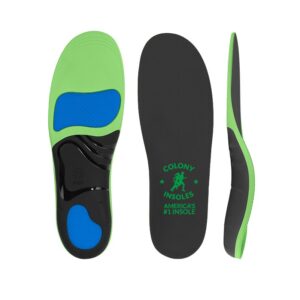 Doctor-Designed Orthotic
Premium Colony Ortho RX
- Recommended by podiatrists
- Memory foam + gel with real arch support
- 60-day money-back guarantee
- Free shipping within the USA
How Orthotic Support Helps Biomechanically
The goal of management is to reduce pressure on the inflamed sesamoids and improve how force is distributed across the foot. A well-built orthotic insole supports the arch so the foot is not forced to overload the forefoot, while a contoured shape helps redistribute weight toward the midfoot and heel. Cushioning beneath the ball of the foot softens impact, and a firmer arch encourages a more efficient stride that lessens repeated stress on the toe joint. Because sesamoiditis frequently overlaps with mechanical issues elsewhere, the same structural support that helps conditions like plantar fasciitis and heel pain or poor arch support can also benefit the forefoot. A consistent, supportive footbed gives the irritated tissue a calmer environment in which to settle.
- Reduces direct pressure on the sesamoid bones during push-off
- Supports the arch to prevent excess forefoot loading
- Cushions repetitive impact through the ball of the foot
- Encourages more balanced weight distribution across the whole foot
- Pairs well with supportive, low-heel footwear for daily relief
Who Sesamoiditis Orthotics Suit Best
Forefoot-focused support tends to help runners, dancers, and anyone on their feet for long shifts, including people standing all day. Those with high arches often benefit most, since rigid, high-arched feet load the forefoot heavily and offer little natural shock absorption. The same is true for athletes whose training repeatedly drives weight through the big toe. If your symptoms are severe, worsening, or paired with swelling or numbness, see a podiatrist to rule out a fracture or another diagnosis, since orthotics support biomechanics but cannot replace a clinical exam.
Getting Started With Daily Support
The simplest first step is a doctor-designed, full-length orthotic insole worn in the shoes you use most. Give your feet a few weeks to adapt, pair the insole with stiff-soled, wide-toed shoes, and ease back into high-impact activity gradually. This pressure-managing approach offers an affordable, low-risk starting point before considering more involved treatment.
Related Orthotics & Guides
- Doctor-designed orthotic insoles
- Arch support inserts
- Inserts for plantar fasciitis and heel pain
- High arch insole support
- Insoles for standing all day
Frequently Asked Questions
Can orthotics cure sesamoiditis?
Orthotics do not cure sesamoiditis, but they are a core part of managing it. By offloading the ball of the foot and supporting the arch, they reduce the repetitive pressure that keeps the sesamoids irritated, which can ease symptoms and support healing alongside rest and proper footwear.
What kind of insole is best for sesamoiditis?
Look for an insole with firm arch support to limit forefoot loading, plus cushioning under the ball of the foot to absorb impact. A contoured, doctor-designed orthotic that redistributes pressure toward the midfoot and heel is generally more effective than a flat, soft pad alone.
Should I wear orthotics in all my shoes?
For the most consistent relief, use supportive insoles in the shoes you wear most, especially during long periods of standing or activity. Pairing orthotics with low-heeled, stiff-soled, wide-toed footwear further reduces stress on the sesamoid bones throughout the day.
When should I see a doctor instead of using orthotics?
See a podiatrist if pain is severe, sudden, or steadily worsening, or if you notice swelling, bruising, or numbness. These can signal a sesamoid fracture or another condition. Orthotics support everyday biomechanics but are not a substitute for a professional diagnosis.