What a Foot Specialist Looks For in an Orthotic
Colony Ortho RX was not built to add one more foam pad to the shelf. It was engineered as a device a foot specialist could reasonably stand behind. The choice in the aisle is genuinely poor: drugstore inserts are flat and unsupportive, offering nothing for the arch to load against, while fully custom clinic orthotics run into the hundreds. Patients get stuck choosing between inadequate cushioning and expensive overkill, with little of clinical value in between. That gap is the reason this brand exists.
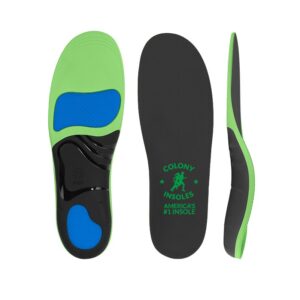 Doctor-Designed Orthotic
Premium Colony Ortho RX
- Recommended by podiatrists
- Memory foam + gel with real arch support
- 60-day money-back guarantee
- Free shipping within the USA
The Three Pillars of Functional Support
Podiatric assessment tends to return to the same three priorities: alignment, cushioning, and shock attenuation. Alignment keeps the foot, knee, hip, and spine stacked through the kinetic chain and controls excess pronation as the foot loads. Cushioning protects the plantar soft tissue that absorbs load from morning to night. Shock attenuation reduces the impulse of each footstrike before it transmits into the joints above. Address those three and you have answered most everyday mechanical foot complaints. Miss them and no amount of packaging redeems the device.
Why Specialists Point People Our Way
Our insole is recommended by podiatrists because it delivers on all three pillars. The structured arch profile holds firm under body weight to maintain alignment and resist medial collapse, rather than flattening by midday. Layered memory foam cushions and conforms to the plantar surface. A targeted gel layer attenuates shock at the heel and forefoot, precisely where loading concentrates. It supports standing, walking, and running with less mechanical aggravation, as medical-grade orthotic construction rather than a four-figure clinic device.
- Structured arch support engineered around real foot biomechanics
- Memory foam cushioning that conforms to the plantar surface
- Gel shock attenuation that helps guard the joints at every step
- Medical-grade orthotic support without the clinic invoice
- One device suited to work, walking, and running
Who This Suits
Anyone who wants specialist-grade biomechanical support without the specialist-grade bill. Perhaps a podiatrist has already told you your arches need help, or perhaps you simply want to look after your feet. Either way, this is the device worth considering. One clinical note: this is educational orthotic support, not a substitute for a professional diagnosis, so have persistent symptoms evaluated.
If you arrived here weighing a custom device, compare us first against our custom-made inserts guide, then read the engineering behind our arch support. Order your Colony Ortho RX today and feel why specialists send people our direction.
Related Insoles & Guides
- Best Shoe Inserts for All-Day Comfort
- Heel Inserts for Heel Pain Relief
- Gel Insoles for Real Shock Absorption
- Height-Boosting Shoe Inserts
- Orthopedic Shoe Inserts
- Arch Support Shoe Inserts
Frequently Asked Questions
What does "podiatrist recommended" actually mean for this insole?
It refers to the design brief, not a celebrity endorsement. The insole was engineered around the three priorities podiatric assessment keeps returning to — alignment through the kinetic chain, protective cushioning for plantar soft tissue, and shock attenuation at footstrike — so a foot specialist could reasonably stand behind it as a first-line, non-prescription device.
How is this different from the flat drugstore inserts on the same shelf?
Most drugstore inserts are unstructured foam: nothing for the arch to load against, no rearfoot control, just temporary padding. Colony Ortho RX holds a defined arch geometry under body weight and controls excess pronation as the foot loads — functional support rather than cushioning alone, at $29 instead of the several hundred a clinic device costs.
Do I still need to see a podiatrist if I use these?
An over-the-counter orthotic handles everyday mechanical complaints — tired arches, mild overpronation, impact-related aches — but it is not a substitute for diagnosis. Persistent pain, numbness, deformity, or diabetes-related foot concerns warrant an in-person exam. Think of this insole as the well-built first step a specialist would rather you try before costlier interventions.
When do alignment, cushioning, and shock attenuation each come into play?
Alignment works through stance, keeping foot, knee, hip, and spine stacked and limiting excess pronation. Cushioning protects plantar soft tissue across hours of standing. Shock attenuation acts in the instant of footstrike, trimming the impulse before it reaches the joints above. Most everyday foot complaints trace back to a gap in one of the three.