The calcaneus is the first structure to take the load
At heel strike, the calcaneus is the leading point of contact, and it absorbs the initial ground reaction force of every single stride. Beneath the bone sits the heel fat pad, a specialized chambered cushion engineered to dissipate that impact. The problem arises when nothing contains the pad laterally. On a flat surface the fat pad splays outward under load and thins over the bone it is meant to protect, leaving the calcaneus to strike with less natural padding than nature intended. That displaced cushioning is a frequent contributor to the sharp, focal heel discomfort many people notice on their first steps out of bed.
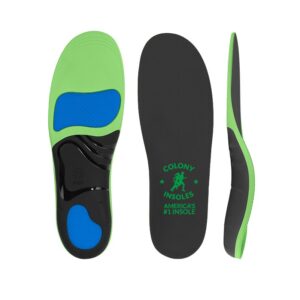 Doctor-Designed Orthotic
Premium Colony Ortho RX
- Recommended by podiatrists
- Memory foam + gel with real arch support
- 60-day money-back guarantee
- Free shipping within the USA
Why containment changes the loading mechanics
Across a typical day the rearfoot fields thousands of loading cycles, and each one transmits force upward through the ankle, knee, and lumbar spine. A genuine heel cup addresses this with two simultaneous mechanisms. It cradles and laterally confines the calcaneus, keeping the fat pad compressed directly under the bone where it cushions most effectively, and it locks the rearfoot into a stable, vertical seat. Stabilize the foundation and the skeletal segments stacked above it inherit a steadier reference to track from, stride after stride.
How the cradle is engineered to perform
This is not a loose accessory dropped into the shoe but a heel seat integrated into one complete orthotic. The deep, walled cup holds the fat pad parked beneath the calcaneus, the substrate underneath attenuates shock precisely at the zone of peak impact, and the heat-molding top surface settles into your anatomy with wear. The outcome is a confined, centered, cushioned heel platform sustained through an entire day on your feet, $29 per pair.
- A walled heel cup that centers the calcaneus and contains the fat pad under load
- Targeted shock attenuation at the point of hardest rearfoot impact
- A conforming top layer that molds to your foot over time
- Support for that focal first-step soreness in the morning
- A clinically designed orthotic build, with free US shipping
Who benefits most
If you spend long hours upright, are managing nagging heel soreness, or feel the rearfoot shifting inside roomy footwear, this platform was built with you in mind. Rearfoot mechanics propagate upward, so if you sense strain higher in the kinetic chain, review our notes on SI joint pain. When the foot also drifts forward in loose shoes, our guide on stopping feet from sliding forward pairs well with firm heel control. This is educational rather than a diagnosis; lingering heel pain warrants a clinical evaluation.
Your heel deserves a contoured seat to settle into, not a flat plane to skid across. Experience what genuine containment and impact control deliver from the very first step. Trial Colony Ortho RX risk-free for 60 days under our full money-back guarantee. Get a pair and give your heels the structure they have been asking for.
Related Insoles & Guides
- Heel Inserts for Heel Pain Relief
- Heel Support Insoles for Heel Pain Relief
- Shoe Inserts for Back of Heel Pain
- Shoe Inserts for Hip Pain Relief
- Insoles for Plantar Fasciitis & Heel Pain
- Shoe Inserts for Foot Pain Relief
Frequently Asked Questions
What does a molded heel cup do that flat heel cushioning can't?
Flat padding compresses while your heel’s own fat pad keeps splaying sideways under load, thinning over the bone it should protect. The cup works by containment: it confines the calcaneus laterally so the fat pad stays compressed directly beneath the bone, where it dissipates impact best. You retain more of your natural cushioning at every heel strike.
Is this a standalone heel cup I drop into the back of my shoe?
No. The cup is built into a full-length, trim-to-fit orthotic, and that matters mechanically. An isolated cup cradles the heel but leaves the arch unsupported, so the foot still rolls inward ahead of it. Here the heel cradle and structured arch shell work together, seating the rearfoot vertically and holding alignment through the rest of stance.
Can stabilizing the heel really influence my knees and lower back?
Each of the day’s thousands of loading cycles transmits force from the calcaneus up through the ankle, knee, and lumbar spine. When the rearfoot sits in a stable, vertical seat, the segments stacked above it track from a steadier reference point. That improves the alignment those joints work from; it is not a treatment for knee or back conditions.
When is heel pain a fat-pad issue rather than plantar fasciitis?
Fat-pad-related discomfort typically feels like a deep bruise centered directly under the heel bone, worse on hard floors and with impact. Plantar fasciitis more often produces a sharp pull at the inner heel where the fascia anchors, especially on first steps. The two can coexist, and persistent heel pain deserves a clinician’s evaluation either way.