Lower-back load that begins at the floor
Lower-back discomfort is easy to treat in isolation, but the feet are the base of the standing kinetic chain. When the arches lose their structural integrity, the foot rolls inward, and that small deviation propagates upward through the ankle, knee, hip, and pelvis. The lumbar musculature compensates to keep you upright, and after a long day on hard flooring it is often the low back that registers the strain most clearly.
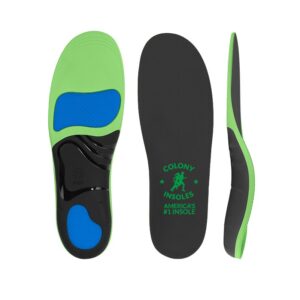 Doctor-Designed Orthotic
Premium Colony Ortho RX
- Recommended by podiatrists
- Memory foam + gel with real arch support
- 60-day money-back guarantee
- Free shipping within the USA
Why correction has to start from the ground up
An overpronating foot tilts the tibia medially and shifts pelvic position, subtly altering the load the spine has to manage. Stabilizing the foot in a more neutral position and attenuating ground reaction force at its source reduces the compensation that travels up the chain. Colony Ortho RX engineers the arch specifically for this. Across a nine-hour shift on tile or concrete, repeated micro-misalignments accumulate, which is why a stable, supportive base underfoot can take measurable load off the postural muscles above it.
How the Colony Ortho RX orthotic is designed
This medical-grade orthotic pairs a structured, geometric arch that supports a neutral, level stance with memory foam and gel that cushions each footfall. The shock-attenuating construction keeps hard-floor impact from transmitting up the spine, and steadier rearfoot alignment lets posture settle rather than bracing against itself. It is podiatrist-designed support intended for the whole standing chain, not the feet alone.
- Structured arch support that promotes a neutral, level stance
- Shock attenuation that limits impact transmission up the spine
- Memory foam and gel for sustained all-day standing support
- Rearfoot alignment that helps reduce postural compensation
- Fits the work shoes and sneakers you already wear
Who this orthotic is for
Warehouse and retail workers on hard floors, anyone who lifts and bends for a living, and people who notice lumbar tightness building toward the end of the day. Because alignment is a head-to-toe matter, many customers pair this with our heel support insoles, and those who also feel forefoot strain reach for our metatarsal pad insoles.
Your spine carries enough already. Give the chain a better foundation for $29 a pair, with free USA shipping and a 60-day money-back guarantee. Wear them for two months, and if the support makes no difference, you pay nothing. Order your Colony Ortho RX orthotic insoles and support your back from the ground up.
Related Insoles & Guides
- Insoles for Lower Back Pain Relief
- Insoles for Ball of Foot Pain Relief
- High Arch Support Insoles for Pain Relief
- Insoles for Knee Pain Relief
- Heel Support Insoles for Heel Pain Relief
- Shoe Inserts for Foot Pain Relief
Frequently Asked Questions
What do my feet have to do with a lower back that aches by evening?
They’re the base of your standing kinetic chain. When arches lose integrity, the foot rolls inward, the tibia tilts medially, and pelvic position shifts — small deviations that propagate upward step after step. Your lumbar muscles compensate continuously to keep you upright, and after hours on hard flooring that compensation is often what the low back registers as strain.
How would an insole help someone standing a nine-hour shift on concrete?
On two fronts. The memory foam and gel attenuate ground reaction force at its source, so each footfall sends less shock up the chain. Meanwhile the geometric arch holds a neutral, level stance hour after hour, preventing the micro-misalignments that accumulate across a long shift and quietly load the postural muscles above.
When is a fair point to judge whether they're helping my back?
After consistent wear, not a single day. Postural muscles that have been compensating adapt gradually, and your feet also need a short progressive break-in to new arch contact. Evaluate across real workweeks on your actual flooring — the 60-day money-back guarantee is sized so the trial can happen under genuine working conditions.
Does foot correction replace other treatment for back pain?
No — it addresses one specific contributor: the alignment deviation and impact load rising from the floor through your feet. Back pain originating elsewhere, from disc problems to injuries needing diagnosis, warrants professional evaluation, and persistent symptoms always do. Think of the orthotic as correcting the foundation’s share of the problem while anything above it gets the attention it needs.