Durable construction is not the same as foot support
Doc Martens are built to last, and the leather and outsole earn their reputation. What the boot does not provide is biomechanical support. The stock footbed is flat and firm, so on a long day of standing or walking the city the arch and forefoot absorb load the boot itself does nothing to manage. Colony Ortho RX exists to add the structural support the boot leaves out, without changing the boots you already own.
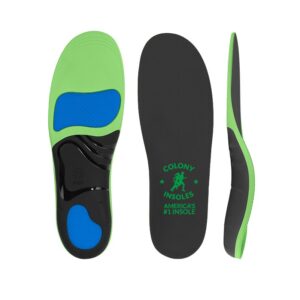 Doctor-Designed Orthotic
Premium Colony Ortho RX
- Recommended by podiatrists
- Memory foam + gel with real arch support
- 60-day money-back guarantee
- Free shipping within the USA
Why a flat footbed lets the arch collapse
Rugged underfoot is not the same as supportive. A flat insole allows the medial longitudinal arch to lower on each step, and as the arch collapses, shock that the foot should attenuate is instead transmitted up through the heel, knees, and lower back. Uncontrolled arch drop also means more pronation through stance and added tension along the plantar fascia. Repeat that across thousands of steps a day on hard surfaces and the deep midfoot fatigue many Docs wearers report by afternoon makes sense.
How a structured orthotic changes the loading
This insole is engineered to address exactly that mechanical gap. It pairs cushioning memory foam with a responsive gel layer over a structured geometric arch shell that supports the medial arch instead of letting it flatten. Controlling arch drop helps moderate pronation and reduces the shock passed up the kinetic chain at each heelstrike. The effect is a boot that supports the foot from day one rather than after a long break-in, using the kind of arch support podiatrists recommend, dropped straight into the boots you wear now.
- An arch shell that supports the medial arch and limits midstance collapse
- Memory foam and gel that attenuate hard heel strikes
- Real shock absorption for concrete, cobblestone, and warehouse floors
- A trim-to-fit profile that fits cleanly into any Doc Martens style
- Helps you stand and walk long hours with less midfoot fatigue
Who benefits from this support
If you wear Docs for work, for shows, or simply for the look, your feet are carrying load the flat footbed ignores. Nurses, baristas, bartenders, and people on their feet all day tend to notice the difference most once the arch is supported. Rotate other rugged footwear? See our insoles for Converse or our gel insoles guide. This is education on foot mechanics, not a diagnosis.
The only thing to lose here is the afternoon ache. Every order ships FREE within the USA under our 60-day money-back guarantee, so you can put a month of real wear on them and judge the support for yourself. Add Colony Ortho RX support for $29 and feel the difference on your next long day.
Related Insoles & Guides
- Best Insoles for Nike Shoes
- Orthopedic Insoles
- Powerstep Alternative
- Superfeet Insole Alternative
- Xstance Insole Alternative
- Height Increase Insoles
Frequently Asked Questions
How can boots this well built still leave my arches aching by afternoon?
Durability and support are different properties. Doc Martens’ leather and outsole are genuinely tough, but the stock footbed is flat and firm, so it does nothing to manage load. On long standing or walking days the medial arch lowers with every step, plantar fascia tension builds, and the deep midfoot fatigue many Docs wearers describe sets in.
Does uncontrolled arch drop in a flat boot really affect my knees and back?
Mechanically, it can. When the medial longitudinal arch collapses on each step, shock the foot should attenuate is transmitted up through the heel toward the knees and lower back, and pronation increases through stance. Supporting the arch with a structured shell limits that drop, so more impact is managed at the foot instead of passed up the chain.
What happens to the boot itself — do I have to modify my Docs to use these?
No modification is needed. The insole adds the structural layer the boot omits while leaving the boot exactly as you own it. If your pair’s footbed lifts out, set it aside and trim the orthotic to that outline; if it is fixed in place, the slim insole sits flat on top of it.
When would I notice the difference most — standing shifts or city walking?
Both, because the mechanism is the same: thousands of repeated steps or sustained stance on hard surfaces. The geometric arch shell limits arch drop and the pronation that follows it, while the memory-foam and gel layers attenuate impact each time the heel lands. The longer the day and the harder the surface, the more that load management matters.