The Shoes Look Incredible. The Forefoot Pays for It.
Heels change your stance the moment you step into them, and the burn under the ball of the foot that arrives a couple of hours into an evening is a predictable consequence of that shift, not bad luck. The wobble on a polished floor and the urge to peel them off in the car are part of the same mechanical story. The encouraging part: you can change how the load distributes without giving up the shoes.
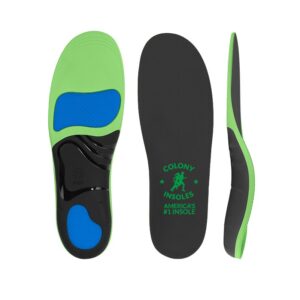 Doctor-Designed Orthotic
Premium Colony Ortho RX
- Recommended by podiatrists
- Memory foam + gel with real arch support
- 60-day money-back guarantee
- Free shipping within the USA
What a Heel Does to Foot Mechanics
Raising the heel pitches your center of mass forward and drives weight onto the metatarsal heads and toes. The medial arch loses the support it had on level ground, and a small region of forefoot ends up bearing load it isn’t built to carry for hours. Over one night that reads as soreness by dessert. Repeated over years, that concentrated metatarsal pressure contributes to the kind of forefoot trouble you’d rather avoid. Targeted cushioning and offloading under the ball, plus support for the arch, redistribute that load.
How the Colony Orthotic Redistributes the Load
We placed memory foam and gel cushioning under the forefoot, where a heel concentrates pressure, and backed it with a structured arch shell so the medial arch isn’t left unsupported and the foot resists sliding forward into the toe box. The shock attenuation takes the edge off each step on marble and pavement. It’s a podiatrist-designed device, and at $29 a pair it’s the most discreet upgrade your favorite shoes will get.
- Forefoot cushioning that offloads pressure from the metatarsal heads
- Arch support that helps stop the foot sliding forward in the shoe
- Gel shock attenuation for hard, unforgiving floors
- Memory foam that conforms to your foot through a long evening
- Podiatrist-designed support that keeps you standing past hour two
Who This Is For
Brides and bridesmaids, women who work in heels, and anyone with a closet of beautiful shoes that punish the forefoot. You get to wear them while the load spreads more evenly across the foot. If the front of the foot takes the worst of it, our inserts for ball of foot pain go deeper on metatarsal offloading, and our arch support inserts show how a supported arch protects the rest of the foot.
Wear the heels and manage the mechanics. Order today with free USA shipping and a risk-free 60-day money-back guarantee. Get a pair of Colony Ortho RX and stand tall without the wince. This is general education, not a diagnosis of your foot.
Related Insoles & Guides
- Insoles for High Heels
- Shoe Inserts for High Arches
- High Arch Support Inserts
- High Arch Insoles for All-Day Comfort
- High Arch Support Insoles for Pain Relief
- Best Shoe Inserts for All-Day Comfort
Frequently Asked Questions
Why does the ball of my foot burn a couple of hours into a night in heels?
An elevated heel pitches your center of mass forward and transfers weight you would normally share across the whole foot onto the metatarsal heads and toes. That small patch of forefoot is not built to carry concentrated load for hours, so it predictably gets sore. It is mechanics, not bad luck, which is why redistributing the load changes the outcome.
How does an insert keep my foot from sliding forward into the toe box?
Sliding happens because a raised heel turns the footbed into a ramp and the medial arch loses the support it had on level ground. Colony’s structured arch shell re-engages that arch, giving the midfoot something to bear against, while memory foam and gel under the forefoot soften the pressure spike where the slide would deposit your weight.
Does wearing heels for years actually set up longer-term forefoot trouble?
Concentrated metatarsal pressure repeated over years can contribute to chronic forefoot problems, which is why managing the load early matters more than toughing it out. No insert can promise to prevent any specific condition, but lowering peak pressure under the metatarsal heads on every wear reduces the cumulative stress those tissues have to absorb.
Can the insole be trimmed down for a slim dress shoe?
The insole is trim-to-fit, so you can cut it down to match a narrower footbed. Dress heels run slimmer than sneakers, so trim conservatively and check the fit as you go, keeping the cushioning seated under the ball of the foot, exactly where a raised heel concentrates pressure and where the offloading is needed most.