That stabbing jolt the instant you stand
You know the sequence: legs swing off the mattress, your bodyweight settles, and a knife-edge pain detonates in the heel before you have even straightened. Heel pain that bites hardest on the opening steps after rest is the signature of a strained plantar fascia, and once it announces itself at dawn it tends to color the whole day. Relief usually arrives not through padding alone but through support that targets the mechanics driving the flare.
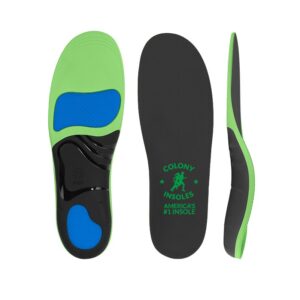 Doctor-Designed Orthotic
Premium Colony Ortho RX
- Recommended by podiatrists
- Memory foam + gel with real arch support
- 60-day money-back guarantee
- Free shipping within the USA
Why the rearfoot demands structure, not just a pad
Pain beneath the heel most often traces back to tension in the plantar fascia, the fibrous cord running along the underside of the foot from the heel bone toward the toes. When the inner arch sinks, that cord is yanked hard where it anchors at the calcaneus, and the heel absorbs the fallout. Lifting the arch and cradling the heel relaxes the fascia so each footfall stops yanking it taut. A cushioned heel cup additionally softens the repetitive pounding that keeps an inflamed attachment angry — a force multiplied across tile and concrete.
How the orthotic confronts heel pain
Colony Ortho RX cradles the calcaneus inside a deep well of memory foam and gel, while its geometrically structured arch guides the foot toward a more neutral stance. You gain real shock attenuation exactly where the heel meets the floor, blunting the impact that would otherwise tug on that irritable band. The approach is podiatrist-designed and medical-grade, and it engages the second you bear weight. Customers who once dreaded sunrise report that the opening step is the first thing to shift.
- A deep heel pocket that softens every strike of the calcaneus
- Arch elevation that eases how hard the plantar fascia is pulled
- Durable memory foam and gel carrying support across a full workday
- Genuine shock attenuation that shields the heels on hard tile and concrete
- Structure tuned to let you rise and walk without bracing for the bite
Who tends to need rearfoot support
If you brace for the opening morning steps, clock long hours on unforgiving floors, or feel the heel ignite after a run, structured rearfoot support belongs in your shoe. Should the soreness reach the lumbar region as the day closes, our insoles for lower back pain address that link as well, and anyone who also notices pressure beneath the ball of the foot can layer in our metatarsal pad insoles.
A morning where that first step does not make you wince is a reasonable expectation. Colony Ortho RX delivers it for $29 a pair, shipped free across the USA and backed by a 60-day money-back guarantee. Consider this educational rather than a diagnosis — heel pain that lingers or turns severe deserves a podiatrist’s assessment. Order your pair and walk into gentler mornings.
Related Insoles & Guides
- High Arch Support Insoles for Pain Relief
- Heel Inserts for Heel Pain Relief
- Heel Cups for Heel Pain Relief
- Running Insoles for Arch & Heel Relief
- Insoles for Ball of Foot Pain Relief
- Insoles for Knee Pain Relief
Frequently Asked Questions
Why does my heel hurt most on the first steps after getting out of bed?
During rest the plantar fascia shortens; when you stand, body weight forces the arch down and yanks the fascia at its calcaneal anchor. Those opening steps load tissue before it has re-lengthened, producing the stabbing jolt. Supporting the arch reduces how far the fascia is stretched with each step, which is why structured support tends to calm first-step pain over time.
How is a contoured heel cup different from just putting a soft pad under my heel?
A pad only softens impact and does nothing about the arch collapse that keeps the fascia under tension. Colony Ortho RX combines both jobs: a deep well of memory foam and gel cradles the calcaneus against repeated pounding, while the structured arch above reduces the pull at the fascia’s heel attachment. The cushioning eases the symptom; the arch geometry addresses the mechanics behind it.
Can these handle a full workday on tile or concrete floors?
Yes — hard flooring multiplies the impact an irritated heel attachment receives, which is why standing jobs on tile or concrete often keep the pain flared. The gel-and-foam heel well attenuates that repetitive loading, and the arch keeps the fascia from being pulled taut through each stance phase. If pain persists or worsens despite support, have a podiatrist evaluate it.
When should heel pain start easing after I switch to structured support?
There is no fixed timetable, because an irritated fascia settles only as fast as it stops being re-strained. Reduced arch strain with every step lets the attachment calm gradually rather than overnight, so judge progress over weeks, not days. Colony Ortho RX carries a 60-day money-back guarantee, which covers a realistic trial period, and persistent pain warrants professional assessment.