What “orthopedic” means in practical terms
When people ask for orthopedic inserts, they usually mean something straightforward: ease the pain in my feet and give me support I can rely on. The word sounds clinical, but the need behind it is ordinary. Colony Ortho RX set out to make orthotic-grade support that’s genuinely affordable and that you won’t dread putting on each morning — medical-grade structure built for daily wear.
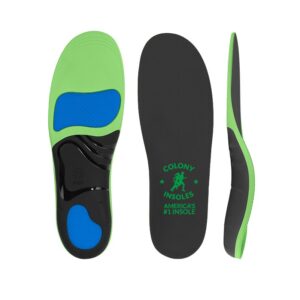 Doctor-Designed Orthotic
Premium Colony Ortho RX
- Recommended by podiatrists
- Memory foam + gel with real arch support
- 60-day money-back guarantee
- Free shipping within the USA
Why structural support changes how the rest of you feels
Your feet absorb thousands of impacts a day, and when they’re unsupported the strain doesn’t stay local. It travels up the kinetic chain into the ankles, knees, hips, and lower back. Effective orthotic support rests on two principles working together: alignment that holds the foot near a neutral position, and pressure redistribution that offloads the tender structures. Get those right and discomfort loses many of the places it tends to begin.
How the orthotic delivers medical-grade support
We built the insole around what matters biomechanically and left out the rest. A structured, geometric arch supports the foot and holds it steady through the full stride. A generous layer of memory foam and gel offloads pressure from the heel and metatarsal heads and attenuates shock before it reaches the joints. It is podiatrist-designed and made to help you stand, walk, and move with less discomfort — whether you’re easing back from a flare-up, managing a persistent ache, or simply on your feet far longer than is reasonable. People managing plantar fascia irritation often tell us the first low-pain morning is what convinces them. This is educational information, not a diagnosis or personal medical advice.
- Geometric arch that supports the foot toward healthy alignment
- Gel and foam that offload pressure from sore structures
- Shock attenuation that spares the knees, hips, and back
- Podiatrist-designed, and supportive without feeling like a board
- $29 a pair instead of hundreds for prescription orthotics
Who orthopedic inserts are for
If daily foot pain is part of your life, if you’re recovering on your feet rather than resting them, or if you simply want serious support every day, this insole was made with you in mind. Many people searching for orthopedic help also want a custom feel or dedicated arch support, and here it all lives in one product.
No prescription required to feel supported. Every order ships FREE within the USA and carries our 60-day money-back guarantee, so you can put them through real days with nothing on the line. Order your Colony Ortho RX and give your feet the structural support they’ve been asking for.
Related Insoles & Guides
- Orthopedic Insoles
- Best Shoe Inserts for All-Day Comfort
- Heel Inserts for Heel Pain Relief
- Gel Insoles for Real Shock Absorption
- Height-Boosting Shoe Inserts
- Arch Support Shoe Inserts
Frequently Asked Questions
What actually makes an insert orthopedic rather than just cushioned?
An orthopedic insert is defined by structure, not softness. It holds the foot near a neutral alignment and redistributes plantar pressure away from overloaded structures like the heel and metatarsal heads. Colony Ortho RX pairs a structured, geometric arch with conforming memory foam and gel, so correction and cushioning work together instead of cushioning standing alone.
How can a foot-level problem show up as knee, hip, or back strain?
Each step sends impact up the kinetic chain. When the foot is unsupported, strain does not stay local — it travels into the ankles, knees, hips, and lower back as those joints compensate for an unstable base. Supporting alignment at the foot reduces that compensatory work, which is why structural support underfoot often changes how everything above it feels.
Do I need a prescription to use an orthotic-grade insole like this?
No prescription is needed. Colony Ortho RX is an over-the-counter orthotic built by doctors around the same two principles clinicians look for: alignment that keeps the foot near neutral, and pressure redistribution that offloads tender structures. It is everyday structural support, not a custom medical device — if you have diabetes-related foot risk or persistent pain, see a podiatrist.
Why do my heels and the balls of my feet hurt first, and what does offloading do about it?
Because the calcaneus and metatarsal heads are the foot’s main contact points, they collect a disproportionate share of every step’s load. Pressure redistribution spreads that load across the whole plantar surface, while the memory foam and gel layer attenuates shock before it reaches the joints — so the structures that normally ache first are carrying noticeably less.