Cross-Shopping Xstance? Lead With The Biomechanics
Anyone comparing Xstance is already asking the right questions about arch support, shell durability, and whether a footbed can actually govern foot motion shift after shift. Colony Ortho RX answers that brief without making you gamble across firmness grades and volume tiers to land on the right one. Our catalog is deliberately short: one medical-grade orthotic, sharpened over years of iteration, at $29 a pair.
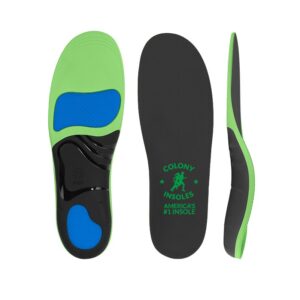 Doctor-Designed Orthotic
Premium Colony Ortho RX
- Recommended by podiatrists
- Memory foam + gel with real arch support
- 60-day money-back guarantee
- Free shipping within the USA
What Happens When The Footbed Is Wrong
Body weight funnels through a small footprint with every stride, and the tissues of the sole absorb that repeatedly. Let the support wear thin or sit mismatched against your arch and the load refuses to stay contained, migrating up through the ankle, the knee, the hip, and finally the lower spine. By midday a poorly built insert can have you aching. Correcting it is not rocket science, but the execution matters: you need cushioning that softens the jolt at heel strike alongside a shell that holds the medial longitudinal arch and curbs overpronation across the whole gait cycle.
The Way Our Orthotic Handles It
Inside every Colony Ortho RX sits a memory foam and gel deck riding on a sculpted arch shell. The foam takes the shape of your sole and evens out the load, then the gel teams with the rigid shell to soak up impact and steady the foot through midstance. The whole thing is podiatrist-designed to carry you across a shift on your feet, a long walk, or a hard run without charging you in soreness later, and there are no model grades or color tiers to puzzle over at checkout.
- Memory foam that molds to the sole and balances plantar pressure
- Gel padding that absorbs the jolt of landing well ahead of the joints overhead
- A rigid arch shell that keeps its shape while it backs up yours
- Addresses the forefoot loading tied to metatarsalgia and ball-of-foot ache
- A single clinically grounded build rather than a sprawling lineup, at $29 a pair
Who It Fits
Our customers arrive from all over: competitors mid-training-block, nurses and educators on their feet for a full rotation, and ordinary folks who just want their daily shoes to treat the foot more gently. If Xstance is on your list, let us win you over on results and price. It is also worth weighing our Superfeet alternative and our view on orthopedic insoles. Treat this as general education rather than tailored medical advice, and see a clinician if symptoms linger or worsen. Put Colony Ortho RX to the test risk-free for 60 days, with free USA shipping. Pick up a pair and feel how the foot loads over genuine structure.
Related Insoles & Guides
- Powerstep Alternative
- Superfeet Insole Alternative
- Aetrex Alternative Insoles
- Custom Insoles Alternative for $29
- Birkenstock Alternative Insoles
- Custom Made Insole Alternative
Frequently Asked Questions
Does one insole model really replace a range of firmness grades and volume tiers?
The brief every tier is trying to answer is the same: hold the medial longitudinal arch, curb overpronation across the gait cycle, and soften heel strike. Colony Ortho RX engineers one shell to that brief, lets the memory foam layer conform to your individual sole, and uses trim-to-fit sizing to handle different shoes.
Why would worn-out footbed support cause pain above my feet?
Every stride funnels body weight through a small footprint, and the tissues of the sole absorb that repeatedly. When support wears thin or sits mismatched against your arch, load stops being contained at the foot and migrates upward — through the ankle, into the knee and hip, eventually the lower spine. Aching by midday is the common signature.
How do the foam and gel layers work with the arch shell underneath?
It is a division of labor. The sculpted shell underneath does the structural work — holding the medial arch and governing how the foot moves shift after shift. Riding on top, the memory foam molds to your sole to even out pressure distribution, while the gel absorbs the jolt that arrives at heel strike.
What signs suggest my current insoles have stopped doing their job?
Watch for the midday pattern: feet that start the shift fine but ache by the middle of it, soreness creeping into the ankles or knees, and visible flattening or compression in the insert itself. Those signal the footbed is no longer containing load. A shell that still holds the arch should not let that migration begin.