Anyone who has left a foot clinic clutching a quote for prescription devices knows the wince that follows. The distance between what a tired foot needs and what a lab charges is the whole reason Colony Ortho RX got started. If you are weighing orthotic insoles, the real question is usually whether you can get structured biomechanical support without a four-figure invoice and a month in the queue. We engineered our orthotic to deliver motion control and alignment backing, minus the casting visits and the lab wait.
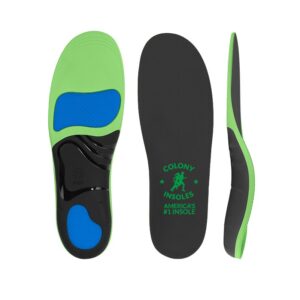 Doctor-Designed Orthotic
Premium Colony Ortho RX
- Recommended by podiatrists
- Memory foam + gel with real arch support
- 60-day money-back guarantee
- Free shipping within the USA
Clinical-grade structure shaped for ordinary days
A prescription device often climbs into the hundreds of dollars, with repeat appointments and a plaster cast along the way. For a huge share of people, that is well beyond what their feet are actually asking for. What most feet do well with is a carefully made insole carrying a real sculpted arch, trustworthy impact damping, and enough alignment backing to keep the chain from foot to knee to lower back moving a little more cleanly all day. That single mandate steered every choice in the design.
We set quick-rebounding memory foam and shock-soaking gel over a stiff, supportive base. What we are chasing is steady backing and tidier alignment through your stride, the very targets a custom device pursues, priced where a regular household can comfortably say yes.
No casts, no waiting weeks
What people value most is how fast it happens. Skip the appointment, skip the plaster, skip the lab turnaround. Buy a pair, shape them to whatever you are wearing, drop them in, and you are supported by that same afternoon. For the day-to-day overload that drives most searches to begin with, that turns out to be precisely the dose of orthotic backing people needed.
Why people pick us
- A sculpted arch that reinforces the medial column and steadies your daily stride
- Memory foam that shapes to your sole for a fit that is yours alone
- Gel that cushions the blow at landing and at push-off
- Designed by a podiatrist for long, comfortable everyday hours
- A trim-to-fit shape, so one pair travels across most of what you own
Backing beneath each step
Standing through every shift, nursing worn-out arches, or just wanting shoes that actually hold you, this orthotic is made for the work. Higher instep? See how we tackle high-arch support. Rolling inward? The overpronation page walks through the mechanics. From start to finish it is one medical-grade insole, and this stays educational guidance, not a personal medical opinion on a particular diagnosis.
A pricey prescription should not be the toll for genuine structure under your foot. The price is $29 a pair, U.S. shipping is included, and a 60-day refund window lets you feel what real backbone does with zero risk. Claim your pair of Colony Ortho RX orthotics and feel the difference.
Frequently Asked Questions
What separates this from a custom prescription device?
A prescription orthotic is cast to your individual foot, usually for a specific diagnosis, and priced in the hundreds with casting visits and lab wait. This is a prefabricated orthotic pursuing the same core targets, a rigid sculpted arch, motion control, and alignment backing, at $29, for feet that need structure rather than a bespoke correction.
When is a non-prescription orthotic a reasonable place to start?
When the problem is general: tired arches, overpronation, or end-of-day aching from unsupportive footwear, structured prefabricated support covers what most feet are asking for. If you have a diagnosed deformity, significant pain, diabetes-related foot concerns, or symptoms that persist or worsen, that is territory for a podiatrist and possibly a casted device.
How can something under my foot influence my knees and lower back?
The foot is the base of a kinetic chain. When the rearfoot rolls inward and the arch collapses, the tibia rotates with it, altering loading at the knee and on up the chain into the lower back. Steadier rearfoot alignment under each stride gives the joints above a more consistent platform to work from.
Does motion control mean my foot gets locked in place?
No. Your foot still needs to flex, roll, and push off through a normal stride. Motion control here means the stiff base and sculpted arch check excessive inward roll, the overpronation that drags alignment off track, while leaving useful range of motion alone. Think of it as a guardrail, not a cast.