A cavus foot loads on two points, not three
A high, rigid arch is a recognizable biomechanical pattern, yet the people living with it rarely hear the mechanics explained. With a tall instep, less of the plantar surface makes ground contact, so bodyweight concentrates on two regions: the heel and the metatarsal heads. Place a flat insole under that foot and an actual void of dead air sits beneath the arch. Nothing fills it. The plantar fascia and arch structures end up bearing load a footbed should be carrying, through every stance phase of the day.
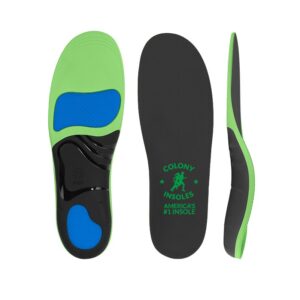 Doctor-Designed Orthotic
Premium Colony Ortho RX
- Recommended by podiatrists
- Memory foam + gel with real arch support
- 60-day money-back guarantee
- Free shipping within the USA
A stiff arch can’t deform to absorb shock
A high-arched foot tends toward supination and limited flexibility. Where a mobile, lower arch pronates and spreads to attenuate impact at heel strike, a rigid cavus arch stays locked and transmits that force straight up the chain. Picture standing with your weight balanced across a heel and a forefoot the size of a coaster, repeated thousands of times daily. Fill the space under the arch and two things happen at once: load spreads back across the whole footprint, and the rigid arch gains a stable shelf to rest on rather than working against gravity unsupported.
Built to meet a high instep
The arch on this insole is a structured, geometric ramp designed to rise into a high instep where flat footbeds leave a gap. Over that sits conforming memory foam and shock-absorbing gel to supply the give a stiff foot cannot generate for itself. This is the supportive, full-contact construction podiatrists tend to recommend for cavus feet, and it is what lets people with high arches stand, walk, and run without that two-point pressure grinding away underneath.
- Raised, structured arch fills the void beneath a high instep
- Plantar load redistributed off the heel and metatarsal heads
- Gel supplies the shock attenuation a rigid arch can’t produce
- Memory foam conforms to the contour of your foot
- Stable support that holds through a full day of weight-bearing
When this matches your foot
If your arches are visibly high, if pressure concentrates under the heel and forefoot, or you know you roll laterally, this footbed was practically drawn around your foot type. Many cavus feet also load the outer border through stance, so our page on underpronation is worth a read, and the comfort insoles overview covers the all-day fundamentals.
A high arch has carried that load unsupported long enough. Give it medical-grade orthotic support engineered for the cavus foot. Order a pair of Colony Ortho RX high arch support insoles.
Related Insoles & Guides
- Heel Support Insoles for Heel Pain Relief
- High Arch Support Inserts
- High Arch Insoles for All-Day Comfort
- Running Insoles for Arch & Heel Relief
- Insoles for Skechers: Add Arch Support
- Insoles for Ball of Foot Pain Relief
Frequently Asked Questions
Does a high arch actually need support if it isn't collapsing?
Yes, for a different reason than a flat foot. A rigid cavus arch cannot deform to absorb shock, so impact transmits up the chain while bodyweight concentrates on just two contact points, the heel and the metatarsal heads. Filling the space under the arch spreads load back across the whole footprint and gives the locked arch a stable shelf instead of an unsupported span.
Why do most insoles I try never actually touch my arch?
Most footbeds are built low to suit average feet, so under a tall instep they leave a void of dead air, and your arch keeps working against gravity with no scaffold beneath it. This insole’s arch is a structured geometric ramp designed to rise into a high instep and make contact where flat profiles fall short.
What connects my high arches to pain at both the heel and forefoot?
With a cavus foot, less of the plantar surface contacts the ground, so each step balances your bodyweight on two small regions, the heel and the metatarsal heads, thousands of times a day. Those zones absorb load the arch never shares. Supporting the midfoot recruits it back into weight-bearing, easing the concentration at both ends.
Can an insole do anything about my tendency to supinate?
A high-arched foot tends toward supination, and a footbed can help manage it mechanically: filling the medial void gives the foot a fuller contact surface to load, and the gel-and-foam body attenuates the impact a stiff arch will not absorb on its own. It supports the pattern rather than erasing it; significant or painful supination deserves a professional gait assessment.