Understanding Achilles Tendinitis
Achilles tendinitis is an overuse injury affecting the strong band of tissue that connects your calf muscles to your heel bone. Repetitive loading, tight calves, sudden increases in training, worn footwear, and poor foot mechanics can irritate the tendon, producing pain, morning stiffness, and swelling along the back of the heel or a few inches above it. Because the Achilles absorbs and returns energy with every step, faulty alignment lower down the chain often keeps the tendon under strain long after the original trigger has passed. Pain that lingers, worsens with the first steps of the day, or returns whenever you ramp up activity is a sign the tendon is not getting the recovery it needs.
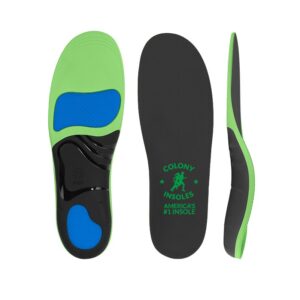 Doctor-Designed Orthotic
Premium Colony Ortho RX
- Recommended by podiatrists
- Memory foam + gel with real arch support
- 60-day money-back guarantee
- Free shipping within the USA
How Orthotic Support Helps Biomechanically
Orthotics for Achilles tendinitis address the condition mechanically rather than simply masking symptoms. A supportive insole controls the position of the rearfoot and limits excessive inward rolling, which reduces the eccentric tug on the tendon during push-off. Many orthotic insoles also create a subtle heel lift effect, shortening the working length of the tendon so it operates in a less provocative range while it heals. By improving how load travels through the foot, the right insert lets you stay active with less day-to-day aggravation.
- Stabilizes the heel to reduce overpronation that overloads the tendon
- Supports the arch to distribute force more evenly across the foot
- Cushions heel strike to lower repetitive impact on irritated tissue
- Promotes consistent alignment from heel contact through toe-off
- Encourages a more efficient gait that eases calf and tendon strain
Who These Insoles Suit
This approach fits runners, walkers, and anyone whose tendon flares with activity, as well as people who are on their feet for long hours. If your feet roll inward, structured arch support can help rein in the excess motion; high-arched feet that strike hard may benefit from the shock absorption discussed on our high-arch insole page. Because the Achilles shares mechanics with the heel, people also managing plantar fasciitis and heel pain often find that one supportive insole eases both problems. Workers who log long shifts may pair recovery with insoles built for standing all day to limit cumulative strain.
Choosing the Right Insole
Look for firm rearfoot control, genuine arch support matched to your foot type, and enough cushioning to soften impact without letting the heel wobble. A doctor-designed insole gives you that structure in an affordable, ready-to-wear form. Remember that orthotics work best alongside calf stretching, gradual load management, and guidance from your clinician; they are a tool to reduce strain while tissue recovers, not a standalone cure or a substitute for medical advice.
Related Orthotics & Guides
- Orthotic insoles for biomechanical support
- Insoles for overpronation and inward rolling
- Arch support inserts for foot alignment
- Inserts for plantar fasciitis and heel pain
- High-arch insoles for shock absorption
Frequently Asked Questions
Can orthotics cure Achilles tendinitis?
No insole can cure tendinitis on its own. Orthotics help by reducing abnormal load and improving alignment so the tendon is less aggravated during daily activity, which supports the natural healing process when paired with stretching, activity modification, and professional care.
How do orthotics reduce strain on the Achilles tendon?
By controlling rearfoot motion and limiting excessive inward rolling, orthotics lessen the eccentric pull on the tendon during push-off. Supporting the arch and stabilizing the heel distributes force more evenly, so the tendon works in a less provocative range while it recovers.
Should I wear orthotics in all my shoes?
For the most consistent benefit, use supportive insoles in the shoes you wear most, including work and walking shoes, not just athletic footwear. Consistent alignment throughout the day prevents the tendon from being repeatedly loaded in poor positions.
Are these insoles suitable if I overpronate?
Yes. Overpronation is a common driver of Achilles strain because it increases the twisting load through the tendon. A structured insole that stabilizes the heel and supports the arch helps reduce that excess motion and the resulting tension on the tendon.