Heels shift the load forward onto the forefoot
A raised heel tips your centre of mass forward and transfers a disproportionate share of bodyweight onto the forefoot and metatarsal heads. The steeper the pitch, the further the foot slides toward the narrow toe box and the more pressure concentrates over a small area of the ball of the foot. Sustained forefoot loading like this is a recognised contributor to metatarsalgia and forefoot discomfort. Colony Ortho RX was built to manage that load distribution, not to disguise it.
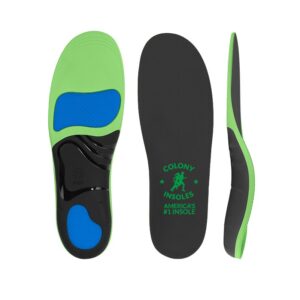 Doctor-Designed Orthotic
Premium Colony Ortho RX
- Recommended by podiatrists
- Memory foam + gel with real arch support
- 60-day money-back guarantee
- Free shipping within the USA
What a heel does to forefoot mechanics
In a plantarflexed position the heel offloads and the metatarsal heads carry the weight the rearfoot normally shares. Most heels compound the problem with a thin, rigid footbed that offers no cushioning and no arch contact, so the foot has nothing to grip and keeps sliding forward into the toes. The result is concentrated pressure under the forefoot and an unstable, forward-creeping position that the small muscles of the foot fight to hold all evening.
Where a structured orthotic redistributes the load
This slim insole sits between the forefoot and that punishing footbed to change how pressure is shared. The gel and memory-foam layers cushion the metatarsal heads and help spread forefoot pressure across a wider area rather than letting it concentrate. The structured arch shell restores contact under the medial arch, giving the foot purchase so it resists sliding into the toe box and improving stability through stance. The memory foam conforms to the foot inside a snug heel instead of crowding it.
- Gel that cushions the metatarsal heads and helps disperse forefoot pressure
- Memory foam that conforms to the foot within a tight shoe
- An arch shell that adds stability and resists the forward slide toward the toes
- Support built to carry you through long hours standing and walking
- Supportive enough to be recommended by podiatrists
Who benefits from this support
Anyone who wears heels through a full workday, a wedding, or a long evening out is asking the forefoot to manage load it is not built to carry alone. If your week alternates between heels and flats, many customers also use our support in dressy leather shoes, or our targeted relief for ball of foot pain when forefoot discomfort sets in. This is general guidance on forefoot loading, not personal medical advice.
Comfort and your favourite shoes were never meant to be mutually exclusive. A pair is $29, ships free anywhere in the USA, and is backed by a 60-day money-back guarantee. Wear them in your heels, and if your forefoot is not noticeably better supported, return them for a full refund. Add support to your heels and put your shoes back to work.
Related Insoles & Guides
- Shoe Inserts for High Heels
- High Arch Insoles for All-Day Comfort
- High Arch Support Insoles for Pain Relief
- Shoe Inserts for High Arches
- High Arch Support Inserts
- Best Insoles for Nike Shoes
Frequently Asked Questions
Why does the ball of my foot burn after an evening in heels?
A raised heel tips your center of mass forward and shifts weight the rearfoot normally shares onto the metatarsal heads. The steeper the pitch, the more pressure concentrates over that small area of the forefoot — sustained loading that is a recognized contributor to metatarsalgia. Most heels add a thin, rigid footbed that cushions none of it.
How does a slim insole change where the pressure goes?
It sits between your forefoot and the hard footbed, so the gel and memory-foam layers cushion the metatarsal heads directly and spread forefoot pressure across a wider area instead of letting it concentrate at a few points. The goal is redistribution — managing the load a heel creates rather than disguising it.
Can it stop my foot sliding forward into the toe box?
It helps with the mechanism behind the slide. On a slick, rigid footbed the foot has nothing to grip, so it keeps creeping toward the narrow toe box while the small foot muscles fight to hold position all evening. A cushioned, contoured surface gives the forefoot purchase and reduces that forward creep, though a very steep pitch still pushes some weight forward.
Will it fit a pointed or strappy heel without crowding my toes?
The insole is deliberately slim and trim-to-fit, so you can cut it to follow a narrow or pointed outline. In a snug toe box, trim a little at a time and re-check the fit. It is built to manage forefoot load, not add visible bulk, and in most closed styles it stays out of sight.